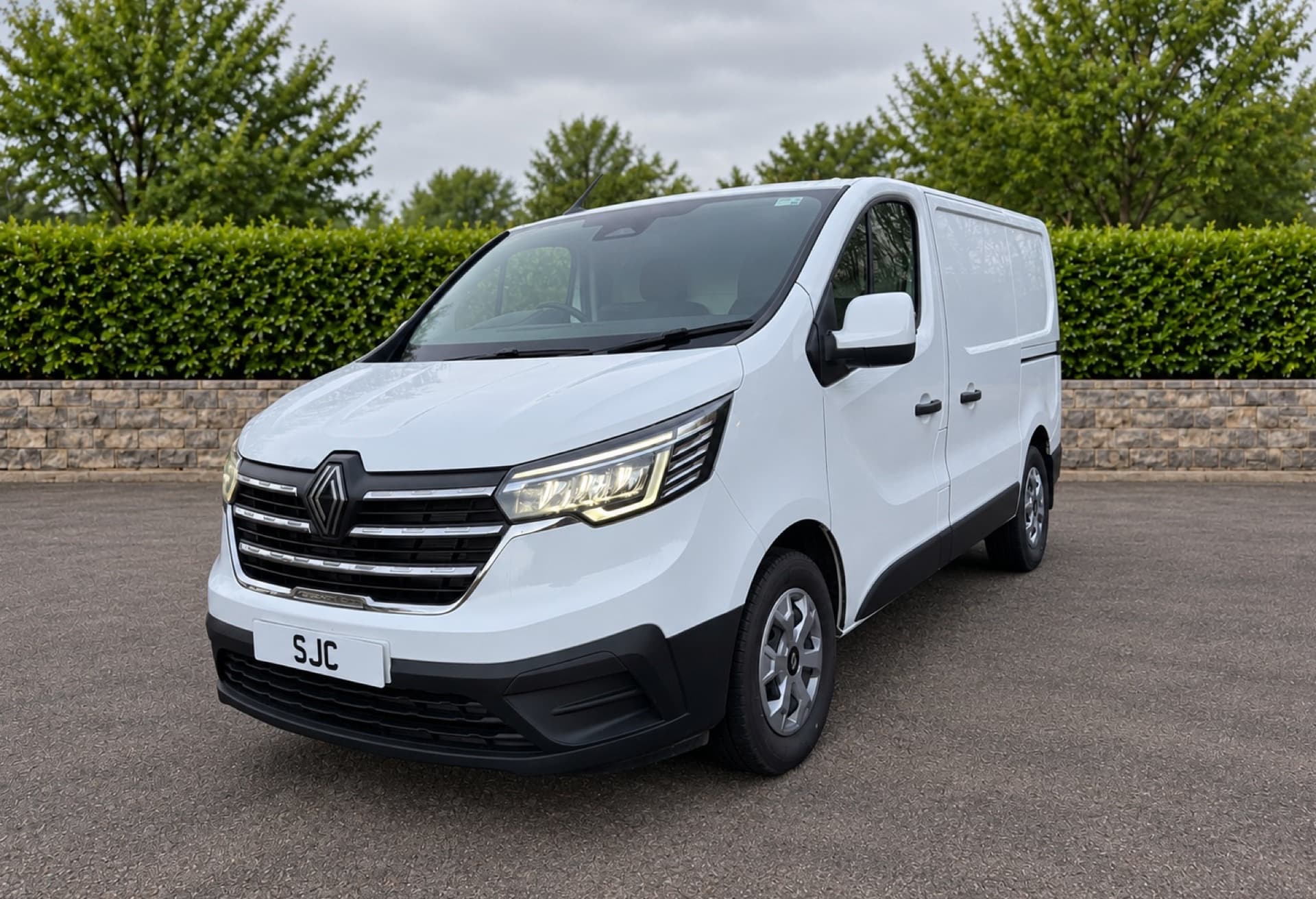
Welcome to Issue 2 of The Payload from Sion Jones Commercials: the UK van and fleet news that matters to your business, in five minutes, every Tuesday. It was first published on our LinkedIn page on 24 November 2026.
It's Black Friday week and the Christmas rush is on, so this week is all about running costs: diesel that's still stubbornly high, why where you charge decides whether an electric van saves you money, a change to how company van tax is collected, and Renault's longer-range Kangoo.
This week in 60 seconds
- Diesel averages just under 195p a litre, about 30p more than petrol
- Fuel duty is frozen until 30 June 2027, then rises by 7.64p a litre
- For a 10-van firm, where you charge an electric van can swing five-year costs by up to £150,000
- From April 2027, company van tax moves onto the payslip and the van benefit charge rises to £4,310
- Renault's 2027 Kangoo E-Tech goes up to 214 miles of range, at the same price
1. Diesel is still 30p dearer than petrol
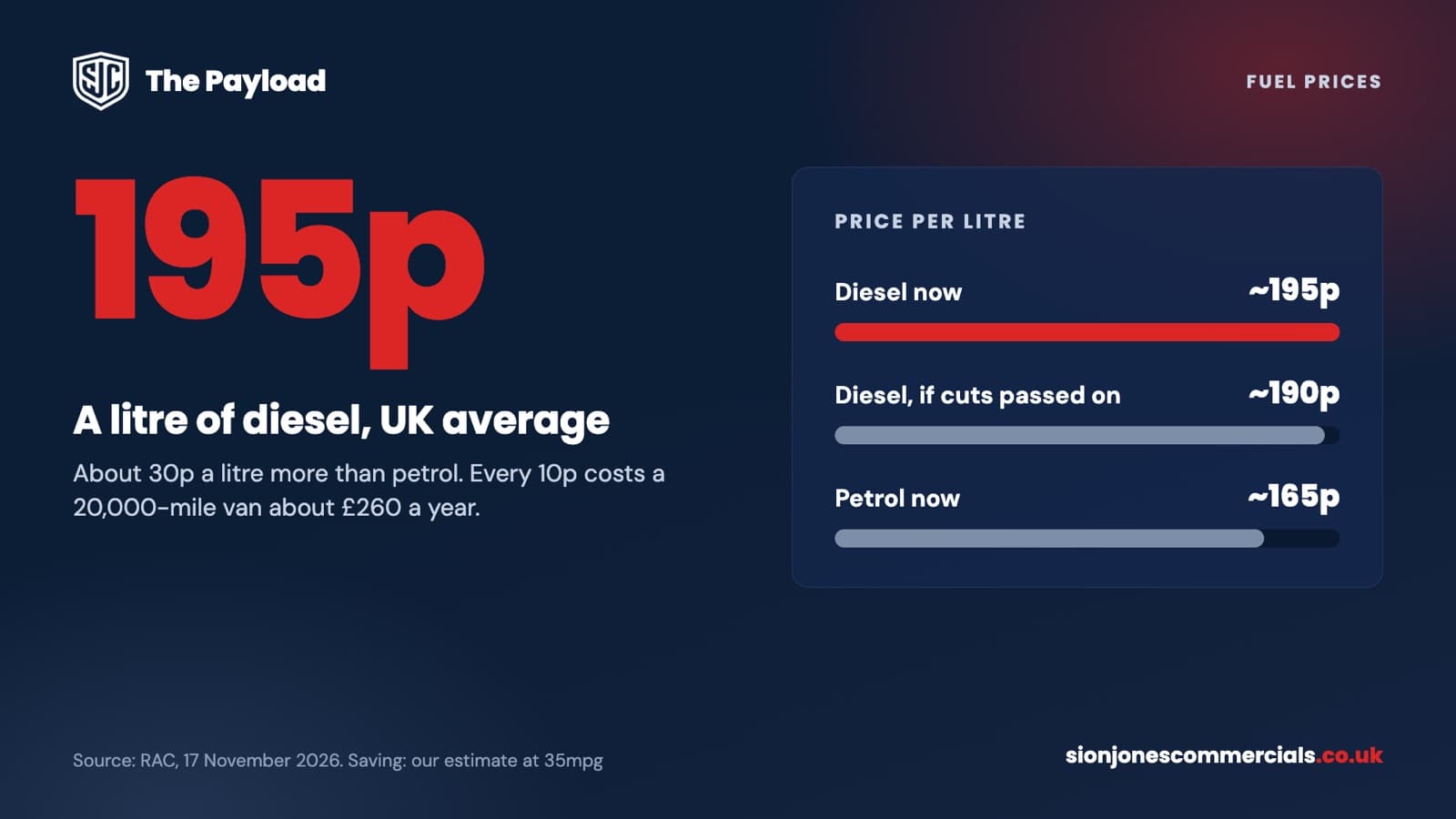
The UK average for diesel is just under 195p a litre, against just under 165p for petrol, says the RAC. Diesel went over £2 a litre for the first time ever on 5 October and has only fallen 3.6p since.
The RAC says wholesale costs have dropped far enough for diesel to come down to around 190p if retailers pass the savings on in full.
Further out, the Budget keeps fuel duty frozen at 52.95p a litre until 30 June 2027. From 1 July 2027 it goes up to 60.59p, a rise of 7.64p.
Rule of thumb: every 10p on a litre of diesel costs a van doing 20,000 miles a year at 35mpg about £260 a year. That July duty rise alone works out at about £200 a year per van, before VAT. (Prices: RAC, 17 Nov 2026. Duty: GOV.UK Budget 2026 rates.)
What it means for you: couriers, builders and electricians clocking up big miles feel this most. If a big van spends most of its day half empty, a smaller, lighter van could cut your fuel bill on every journey. View our small vans, or see our van sizes guide.
2. Electric vans: where you charge decides the sums
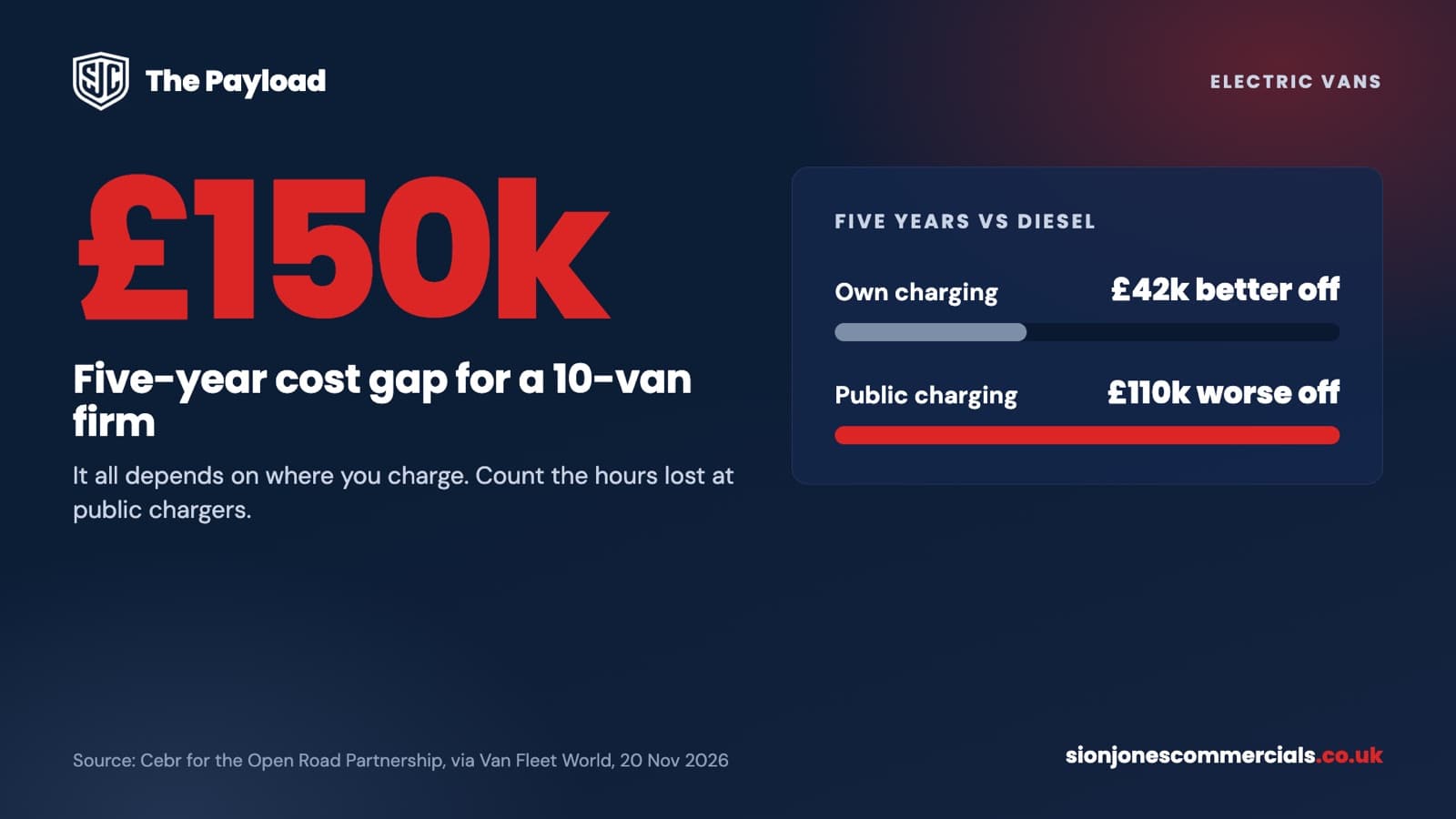
New research from the Centre for Economics and Business Research (Cebr) modelled a construction firm running 10 vans. With its own charging, going electric saves it £42,000 over five years compared with diesel. Relying on public chargers leaves it £110,000 worse off once the lost working hours are counted. That's a gap of up to £150,000.
The study was paid for by the Open Road Partnership (United Rental Group, Zenith, Enterprise Mobility and Vertu Motors), which wants the government to make public charging cheaper and easier.
Update on the ZEV Mandate: there's still no decision. The government's consultation closed on 23 October and the GOV.UK page says it is still analysing the feedback. Last week BT, Ikea, Centrica and Openreach were among the big fleets urging ministers to keep the targets and add support instead.
What it means for you: if your vans come back to a yard or your drivers can charge at home, the numbers can work in your favour. If they'd rely on public chargers, work out the time lost to charging before you switch. View our electric vans, or read our electric van guide.
3. Company van tax moves onto the payslip
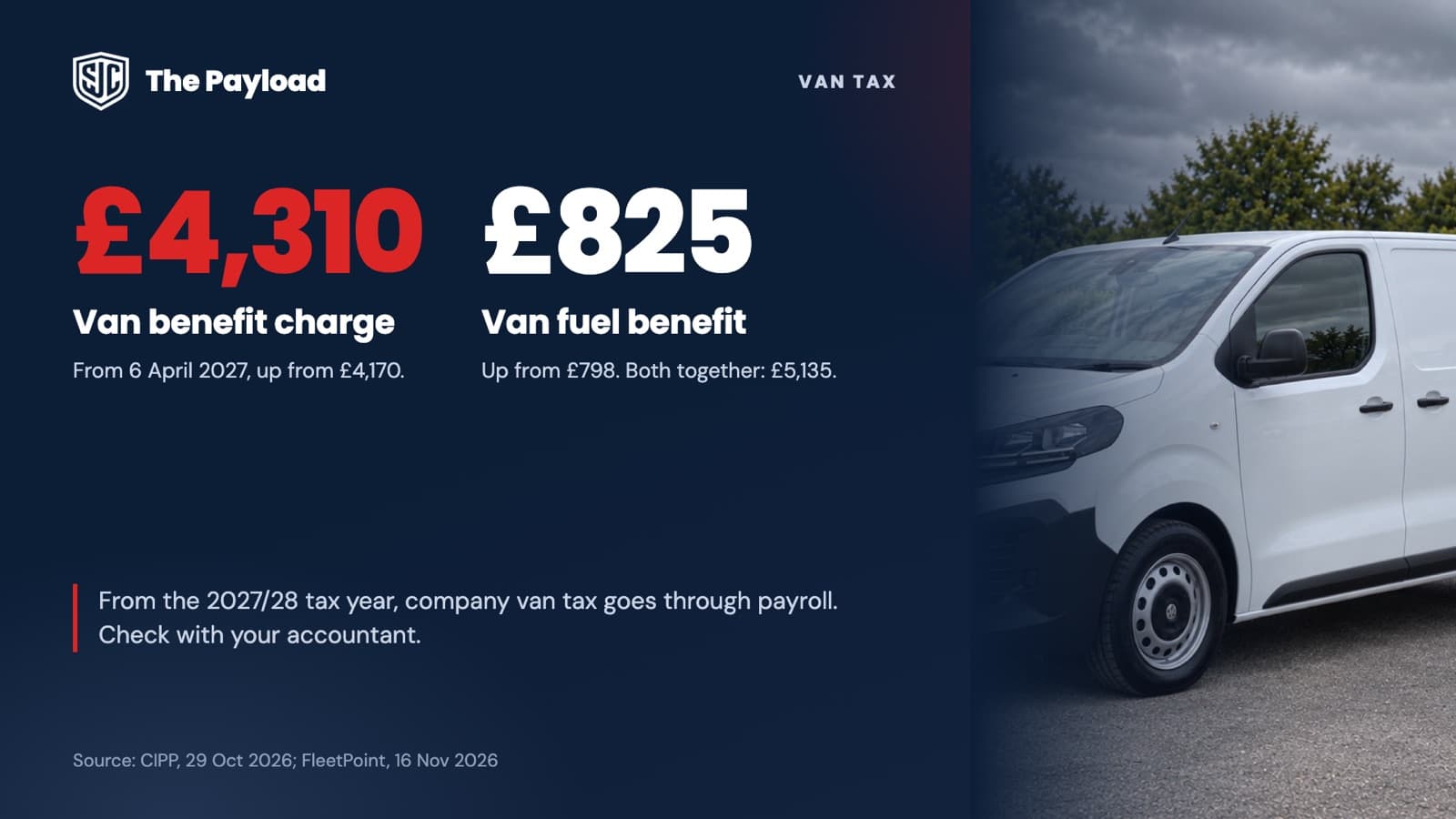
From the 2027/28 tax year, employers must put company van benefit and van fuel benefit through payroll, rather than reporting them at the end of the year.
The charges go up on 6 April 2027 too. The van benefit charge rises from £4,170 to £4,310, and the van fuel benefit charge from £798 to £825. For a driver with both, that's a taxable benefit of up to £5,135 a year.
What it means for you: if your staff take vans home, now is a good time to check who uses their van privately, what your private-use policy says and whether your payroll is ready. Every business is different, so check with your accountant where you stand. Our company van tax guide explains the basics. View all our vans.
4. New: Renault's 2027 vans, with a longer-range Kangoo
Renault has opened orders for its 2027 Kangoo, Trafic and Master.
- Kangoo E-Tech electric: a bigger 52kWh battery (up from 44kWh) gives up to 214 miles on the official WLTP test. Faster charging takes it from 15% to 80% in about 30 minutes, and the price stays the same
- Prices: Kangoo from £21,800 + VAT, Trafic from £30,800 + VAT and Master from £43,250 + VAT
- When: Trafic deliveries start in December; first Kangoo and Master deliveries are due in January 2027
What it means for you: for plumbers, florists and city delivery drivers, 214 miles is enough to cover most small-van days on one charge. View our Renault vans.
Also on the radar
- Budgets squeezed: the Association of Fleet Professionals says some fleets are under pressure to cut their budgets by up to 30%, which it calls unviable
- New Toyota Hilux: the new Hilux, offered as a diesel or fully electric, won Adventurer's Choice at the Carwow Car of the Year Awards. Toyota hasn't given UK prices yet. View our Toyota vans, or compare it in our Ford Ranger vs Toyota Hilux guide.
- Electric Sprinters up north: Highland haulier M&H Carriers has added 18 Mercedes-Benz eSprinters, taking its electric fleet to nearly 30. View our Mercedes-Benz vans.
- Charging at bus depots: Paua has opened 13 Stagecoach depots, with 652 connectors, to approved business fleets, including electric vans.
- Wales: works on the Menai Suspension Bridge are now delayed until autumn 2027, and the 7.5-tonne weight limit stays in place until they're done
Coming soon
- ZEV Mandate decision: expected soon, with no date set yet
- December: first deliveries of the 2027 Renault Trafic
- 6 April 2027: new van benefit charges, and van tax goes through payroll
- 1 July 2027: fuel duty rises 7.64p a litre
This week at Sion Jones Commercials
Our deals change every week, all with free UK delivery. See our latest van deals, get a quote, or call us on 01656 502099.
With diesel near 195p, what are you doing to keep fuel costs down this winter: planning routes, smaller vans, or going electric? Tell us in the comments on LinkedIn, where you can also subscribe to The Payload every Tuesday.
Sources: RAC (17 Nov 2026), GOV.UK Budget 2026 rates and allowances, GOV.UK ZEV Mandate consultation, Cebr via Van Fleet World (20 Nov 2026), CIPP (29 Oct 2026), FleetPoint (16 Nov 2026), Renault UK (18 Nov 2026), Toyota UK (19 Nov 2026), Van Fleet World (17, 19 and 23 Nov 2026), Welsh Government (23 Nov 2026). Fuel savings are our own estimate from the RAC prices. Launch dates are manufacturers' plans and can change.