What does this glossary cover?
It explains the words you'll come across when you lease, finance or choose a van, one or two plain sentences each. The terms are grouped into leasing and finance, weights, sizes, body types, tax and rules, and electric vans. Each one links to a fuller guide where we have one. It was checked on 19 November 2026.
Leasing and finance terms
- Contract hire: a long-term rental of a new van. You pay fixed monthly rentals for an agreed term and mileage, then hand the van back. You never own it. Our contract hire guide explains it in full.
- Finance lease: you rent the van from a funder with lower monthly rentals and a larger final payment, called a balloon. You never own it. At the end the van is usually sold, and you normally keep most of any money above the balloon, or pay any shortfall. See finance lease.
- Hire purchase (HP): you pay a deposit and monthly instalments. Once the last payment and any option to purchase fee are paid, the van is yours. See hire purchase.
- Outright purchase: buying the van with your own money, with no finance.
- Funder: the finance company that pays for the van and owns it during a contract hire or finance lease agreement. It's also called the lender or leasing company.
- Broker: a firm that arranges finance between a business and a funder. We can introduce UK limited companies and larger partnerships to our finance partner, Padington Business Finance. We can't introduce sole traders, individuals or small partnerships.
- Initial rental: the first payment on a lease, stated as a number of monthly rentals, usually 3, 6, 9 or 12. A bigger initial rental means lower monthly rentals.
- Rental profile: how the payments are set out. "9 + 47" means an initial rental equal to nine monthly rentals, then 47 monthly rentals, over a 48 month term.
- Term: how long the agreement lasts, usually 24 to 60 months for a van.
- Annual mileage: the miles a year the rentals are based on. Choose a realistic figure, because going over costs extra.
- Excess mileage charge: on contract hire, a charge in pence per mile for every mile over the agreed total at the end of the agreement. The rate is set out in your contract.
- Maintenance package: an optional extra on contract hire that covers routine servicing, MOTs, tyres and mechanical wear for one monthly payment. It doesn't cover accidental damage, insurance or fuel.
- Residual value: what the funder expects the van to be worth at the end of the agreement. A higher residual value means lower monthly rentals.
- Balloon payment: a larger lump sum due at the end of a finance lease, or of some hire purchase agreements. It lowers the monthly payments.
- Option to purchase fee: a small fee paid at the end of hire purchase, after which you own the van.
- Early termination: ending an agreement before the end of its term. Funders charge for it, often a share of the rentals still to pay, so check your contract.
- Settlement figure: the amount needed to pay off a finance agreement early.
- Fair wear and tear: the normal wear expected on a van at the end of a lease, for its age and mileage. Damage beyond it is charged for.
- BVRLA: the British Vehicle Rental and Leasing Association, the trade body for leasing companies. Its fair wear and tear standard is the guide most funders use when a van is handed back.
- Ex VAT: a price that doesn't include VAT. Business van prices are usually shown ex VAT, so add 20 per cent for the full amount.
Weight terms
- Gross vehicle weight (GVW): the most the van can legally weigh, fully loaded, with the driver, passengers and fuel. It's also called the gross vehicle mass (GVM) or maximum authorised mass (MAM), and it's on the van's weight plate.
- Kerb weight: what the van weighs empty, ready to drive. Makers measure it slightly differently, for example with or without a driver.
- Payload: what the van can carry: gross vehicle weight minus kerb weight. The driver, passengers, racking and tools all count against it. Our payload guide shows how to work it out.
- Gross train weight (GTW): the most the van, a trailer and both loads can weigh together.
- Towing capacity: the heaviest trailer the van can tow. "Braked" means a trailer with its own brakes, which can be much heavier than an unbraked one.
- 3.5 tonne van: a van with a gross vehicle weight of 3,500kg, the most you can drive on a standard car licence. Zero emission vans up to 4,250kg can be driven on a car licence too, under the rules explained in our payload guide.
Size terms
- L1, L2, L3, L4: the van's length, from shortest to longest. Makers use different measurements, so an L2 from one brand isn't always the same size as an L2 from another.
- H1, H2, H3: the roof height. H1 is a standard low roof, H2 a medium or high roof, and H3 the tallest.
- L2H2: a van that's the second length and the second roof height in that maker's range.
- SWB, MWB, LWB, XLWB: short, medium, long and extra-long wheelbase. Some makers use these names instead of L numbers.
- Wheelbase: the distance between the front and rear wheels. A longer wheelbase usually means a longer load area.
- Load length: the length of the load floor, from the bulkhead to the rear doors.
- Width between the wheel arches: the narrowest point of the load floor. It decides whether a pallet or an 8ft by 4ft sheet fits flat.
- Load volume: the space in the load area, in cubic metres (m³).
- Bulkhead: the panel between the cab and the load area. It protects you from the load.
- Load-through bulkhead: a bulkhead with a flap, usually under the passenger seat, so long items such as pipes can slide into the cab footwell.
- Europallet: a standard pallet, 1,200mm by 800mm.
Van body types
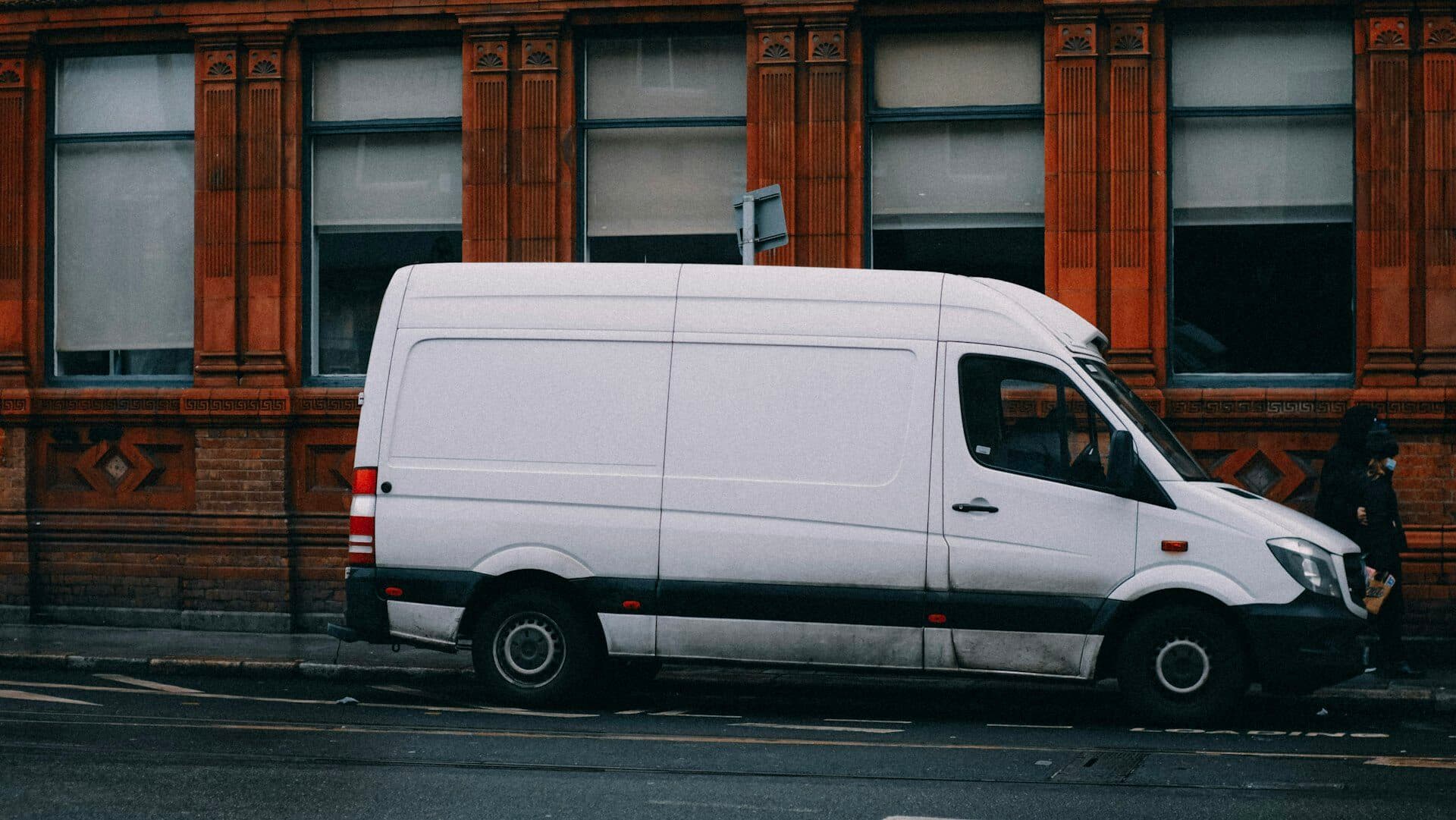
- Panel van: a van with a closed metal load area and no side windows behind the cab. The most common type.
- Crew van: a panel van with a second row of seats behind the driver, so it carries a team as well as tools. It's also called a double cab-in-van or DCiV. Some crew vans count as cars for company tax, so see our company van tax guide.
- Kombi: a van with windows and a second row of seats behind the cab, for carrying passengers as well as a load.
- Chassis cab: the front cab on a bare chassis, with no body behind. A body such as a tipper, dropside or box is built on to suit the job.
- Dropside: an open flatbed with low sides that fold down, for loading from the side or back.
- Tipper: an open body that tips up to empty the load, often used by builders and landscapers.
- Luton: a large box body that extends over the cab roof, for bulky light loads. Many have a tail-lift.
- Box van: a van with a square, closed box body on a chassis cab.
- Curtain sider: a box body with curtain sides, so it can be loaded by forklift from the side.
- Pick-up: a vehicle with a cab and an open load bed behind it, usually four-wheel drive. Single cab, extra cab and double cab versions are taxed differently, as explained in our double-cab pick-up tax guide.
- Conversion: a van built or fitted for a job before delivery, for example a welfare van, refrigerated van or jetting van.
Tax and rules
- VAT reclaim: a VAT-registered business can usually reclaim the VAT on a van it uses for business. Our VAT on van leasing guide explains the rules for each type of finance.
- Van benefit charge: the flat taxable amount a driver pays tax on if they can use a company van privately: £4,170 for 2026/27, or £0 for a fully electric van. See our company van tax guide.
- Benefit-in-kind (BIK): tax on a perk from your employer, such as private use of a company van.
- Capital allowances: tax relief on business equipment you own, including vans bought outright or on hire purchase. The Annual Investment Allowance (AIA) can give full relief on most vans in the first year.
- VED (road tax): Vehicle Excise Duty, the yearly tax to use a van on the road. Most vans up to 3,500kg registered since March 2001 pay the same flat rate, £360 for 12 months, and that includes electric vans (GOV.UK: vehicle tax rates).
- Clean Air Zone (CAZ): an area in an English city where vans that don't meet the emissions standard pay a daily charge. See our Clean Air Zones guide.
- ULEZ: London's Ultra Low Emission Zone, which covers all London boroughs and charges vans that don't meet the standard £12.50 a day.
- Euro 6: the emissions standard most diesel vans need to meet to drive in Clean Air Zones without paying. Petrol vans need Euro 4.
- Operator's licence (O-licence): a licence you need to use goods vehicles over 3,500kg for business, including a van and trailer over 3,500kg combined. There are some exemptions, explained in our payload guide.
- Tachograph: a device that records driving time. It's not needed on a van up to 3,500kg used in the UK.
- V5C (logbook): the vehicle registration document. On contract hire and finance lease, the funder usually holds it, because the funder owns the van.
Electric van terms
- Zero emission van: a fully electric van, with no tailpipe emissions. It's also called a battery electric van, BEV or EV.
- Plug-in hybrid (PHEV): a van with an engine and a battery you charge from a plug, so it can drive short distances on electric power alone.
- kWh: kilowatt-hour, the measure of a battery's size. A bigger battery usually means more range.
- WLTP range: the official range from the standard lab test. Real-world range is usually lower, especially in winter and with a heavy load.
- AC and DC charging: AC is slower charging, at home, at work or at most public posts. DC is rapid charging, used at motorway services and charging hubs.
Our electric van guide covers range, charging and grants in more detail.
Frequently asked questions
What does L2H2 mean on a van?
It means the van is the second length (L2) and the second roof height (H2) in that maker's range. The L and H numbers are each maker's own sizes, so an L2H2 from one brand isn't exactly the same as another's. Check the load length, width and height in metres before you choose.
What is the difference between GVW and payload?
GVW, the gross vehicle weight, is the most the van can weigh fully loaded. Payload is what it can carry: GVW minus the van's kerb weight. The driver, passengers, racking and tools all come out of the payload.
What is an initial rental on a van lease?
It's the first payment, stated as a number of monthly rentals, usually 3, 6, 9 or 12. For example, on a "9 + 47" profile you pay nine months' rental up front, then 47 monthly rentals. A bigger initial rental lowers the monthly payments.
What is a balloon payment?
It's a larger lump sum due at the end of a finance lease, or of some hire purchase agreements. It keeps the monthly payments lower. On a finance lease the van is usually sold at the end, and the sale money goes towards the balloon.
What is the difference between contract hire and finance lease?
On contract hire you pay fixed rentals and hand the van back at the end, with nothing more to pay if it's within the mileage and fair wear and tear. On a finance lease the monthly rentals are lower, but there's a balloon payment at the end, and you take the risk on what the van sells for. You don't own the van with either.
What is BVRLA fair wear and tear?
It's the trade body's standard for what counts as normal wear when a leased van is handed back, for its age and mileage. Small marks are usually accepted. Damage beyond the standard, such as large dents or a cracked windscreen, is charged for.
Have a question we haven't covered?
Call our Bridgend team about the van, the term and the mileage that suits your business. We'll explain any part of a quote in plain English.
Useful next steps:
- Read the van leasing guide
- Read contract hire explained
- Browse our van deals
- See our contract hire options