What is van payload?
Payload is the weight a van can legally carry: its gross vehicle weight (the most it may weigh fully loaded) minus the weight of the van itself. Everything you add counts, including passengers, racking, tools and the load. This guide was checked against GOV.UK and DVSA guidance on 19 November 2026.
Van weights at a glance
| Term | What it means |
|---|---|
| Gross vehicle weight (GVW) | The most the van may weigh fully loaded. Also called maximum authorised mass (MAM) |
| Kerb weight | The empty van. Makers don't all measure it the same way, so check whether it includes a driver |
| Mass in service (V5C box G) | The empty van with a 75kg driver and the fuel tank at least 90 per cent full |
| Payload | Gross vehicle weight minus the van's actual weight. What's left for people, kit and load |
| Gross train weight (GTW) | The most the van, a trailer and both loads may weigh together |
| Axle limits | The most the front and rear axles may each carry |
How do you work out a van's payload?
Take the gross vehicle weight and subtract the van's actual weight. A van with a gross weight of 3,500kg and a weight of 2,150kg in service has a payload of 1,350kg on paper. Then take off everything that isn't the load you're carrying, because that comes out of the payload too.
GOV.UK's guide to vehicle weights says the maximum authorised mass "is listed in the owner's manual and is normally shown on a plate or sticker fitted to the vehicle".
Where do you find a van's weights?
There are two places to look:
- The VIN plate. This is usually in the passenger door frame or under the bonnet. It lists four weights in this order: gross vehicle weight, gross train weight, front axle limit and rear axle limit (Regulation 19/2011, Annex I).
- The V5C logbook. Box F.1 is the gross vehicle weight and box G is the mass in service. F.1 minus G gives you a rough payload before any racking or extras.
If the gross train weight on the plate shows "0" or a dash, the van isn't approved to tow. Otherwise, the gross train weight minus the gross vehicle weight tells you how much trailer the van can pull, up to the braked and unbraked limits in the handbook.
What counts towards a van's payload?
Everything you add to the van, and everyone in it. The van's mass in service already includes a 75kg driver and nearly a full tank. These all come off the payload:
- Passengers, at their real weight
- Factory options such as a bulkhead, ply lining, roof rack or towbar
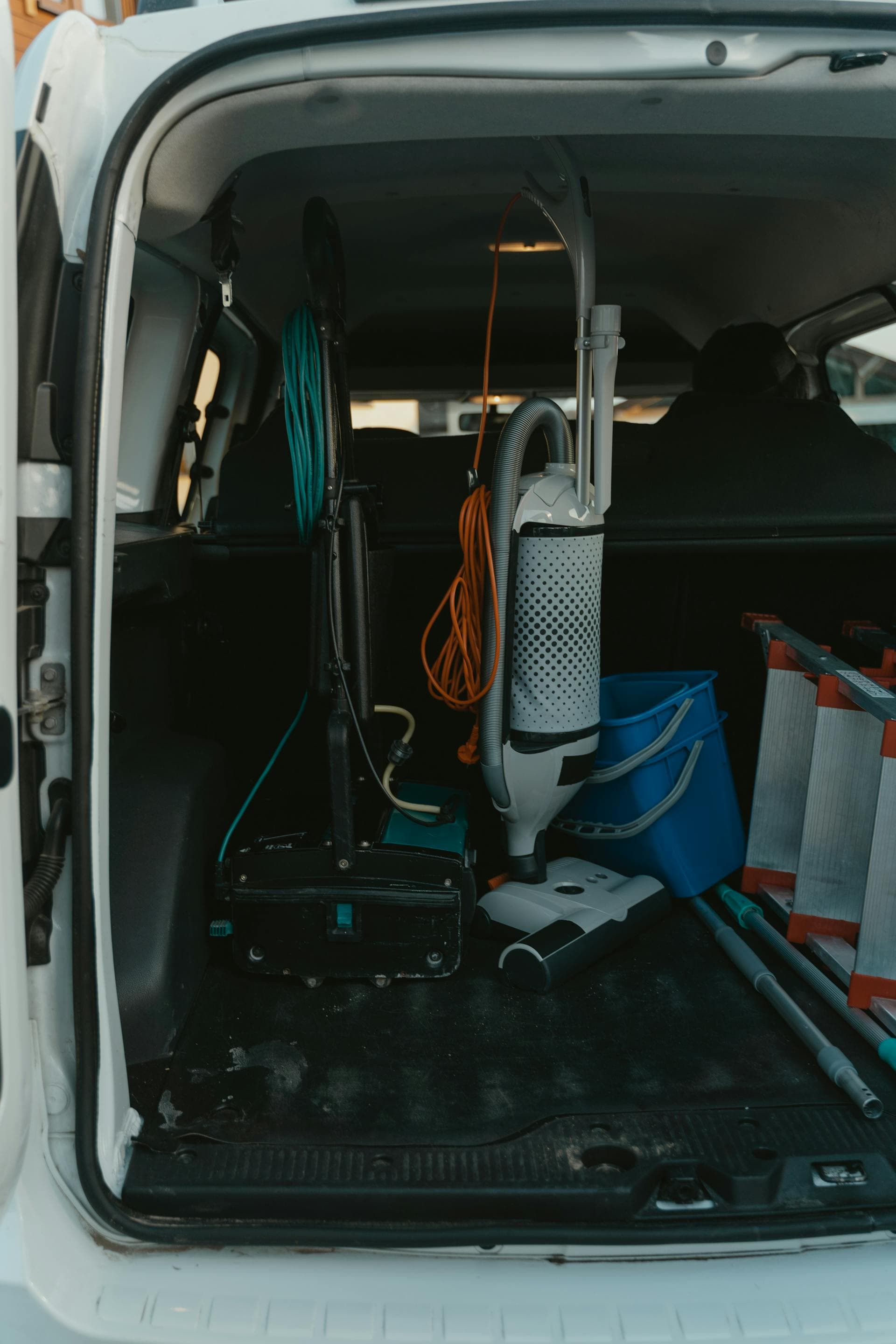
- Racking, shelving and ladders, which can easily weigh 50 to 200kg
- Conversions such as a tipper, dropside or Luton body. Chassis cab payloads are quoted before the body goes on
- Tools and materials you carry every day
- The trailer's nose weight on the tow ball, which the van carries
Worked example: how much can you really carry?
Here is a made-up 3,500kg van with a mass in service of 2,150kg, set up for a tradesperson who tows a small trailer.
| Weight | |
|---|---|
| Payload on paper (3,500kg minus 2,150kg) | 1,350kg |
| Passenger | −80kg |
| Racking | −120kg |
| Towbar | −30kg |
| Tools carried every day | −150kg |
| Trailer nose weight | −100kg |
| Left for the load | 870kg |
More than a third of the payload has gone before any load is on board. If you need to carry a set weight, tell us what goes in the van and we'll find one with the payload to match.
What do 280, 300 and 320 mean on a Ford Transit Custom?
They're the van's gross vehicle weight. A Transit Custom 280 is a 2.8 tonne van, a 300 is 3.0 tonnes and a 320 is 3.2 tonnes. A heavier gross weight usually means more payload in the same body. Other makers use different codes, so check the VIN plate or the spec sheet.
What are the fines for overloading a van?
DVSA can give the driver a fixed penalty of £100 to £300, depending on how far over the van is (DVSA: fines and financial deposits). DVSA examiners usually allow 5 per cent over before they fine, unless the van is a tonne or more over.
| How far over | Fixed penalty |
|---|---|
| Less than 10 per cent | £100 |
| 10 per cent to under 15 per cent | £200 |
| 15 per cent and over | £300 |
| 30 per cent or more | Usually a court summons instead |
DVSA can also stop the van going any further until the extra weight is taken off. The offence covers the gross weight and each axle, so you can be under the gross weight and still be fined for overloading the rear axle. A 3,500kg van that weighs 3,850kg is 10 per cent over.
Overloading also makes a van harder to steer and slower to stop. It can invalidate your insurance, so tell your insurer about racking and conversions.
Who is responsible if a van is overloaded?
The driver gets the fixed penalty. Employers and operators can face action too. The Road Traffic Act 1988, section 41B gives a defence if the van was on its way to the nearest weighbridge or place to unload. It also gives one if the van was no more than 5 per cent over, wasn't over when loading finished, and nothing was added since.
If you're not sure, weigh the loaded van on a public weighbridge. Check each axle as well as the total.
Can you drive a 3.5 tonne van on a car licence?
Yes. If you passed your car test on or after 1 January 1997, a category B licence covers vans up to 3,500kg gross weight (GOV.UK: driving licence categories). For a diesel or petrol van over 3,500kg you need category C1. Many people who passed before 1997 already have C1 on their licence; you can check your licence online.
Can you drive a 4.25 tonne electric van on a car licence?
Yes, since 10 June 2025. A category B licence now covers zero emission vans (battery electric or hydrogen) up to 4,250kg gross weight (GOV.UK: driving an electric or hydrogen-powered vehicle). The law is SI 2025/608.
- No extra training. The old five hours of training has gone.
- Towing is allowed, as long as the van and trailer together don't go over 7,000kg and the van's own plate allows towing.
- Great Britain only. Don't take a 4.25 tonne electric van abroad on a car licence.
- Electric and hydrogen only. Hybrid, gas and diesel vans stay at 3,500kg.
The rule exists because batteries are heavy. An electric van can have less payload than the diesel version at the same gross weight, so the extra 750kg lets it carry a similar load. Our electric van guide covers range, charging and grants.
Do you need an operator's licence for a van?
Not for a van up to 3,500kg on its own in the UK. You need a goods vehicle operator's licence for a van over 3,500kg, or for a van and trailer over 3,500kg combined (GOV.UK: being a goods vehicle operator). There's no need if the trailer weighs under 1,020kg empty and you only carry your own goods.
Zero emission vans from 3,500kg to 4,250kg used in Great Britain are currently exempt. Vans over 2,500kg carrying goods for hire or reward in the EU and some other European countries need a standard international operator's licence.
Do vans need a tachograph?
Not a van up to 3,500kg used in the UK. Over 3,500kg, including any trailer, the drivers' hours rules and a tachograph usually apply (GOV.UK: drivers' hours for goods vehicles). There are exemptions in the UK, for example vehicles up to 7.5 tonnes carrying the driver's own tools within 100km of base, where driving isn't the main job.
Since 1 July 2026, vans over 2,500kg doing international hire or reward work also need a smart tachograph. UK-only vans under 3,500kg still don't.
Frequently asked questions
What is van payload?
Payload is the weight a van can legally carry. It's the gross vehicle weight minus the van's own weight, and it has to cover passengers, racking, tools and the load, not just the goods.
How do I find my van's payload?
Look at the V5C logbook: box F.1 is the gross vehicle weight and box G is the weight of the van with a driver and fuel. F.1 minus G is a rough payload before racking and other extras. The VIN plate shows the same gross weight and the axle limits.
What is the fine for overloading a van?
DVSA can give the driver a fixed penalty of £100 if the van is under 10 per cent over, £200 from 10 to under 15 per cent, and £300 at 15 per cent or more. At 30 per cent over it's usually a court summons, and the van can be stopped until the load is reduced.
Does the driver count towards payload?
It depends on the figure you start from. The V5C mass in service already includes a 75kg driver, so you don't take the driver off again. Some makers' kerb weights don't include a driver, so check which figure you're using.
Can I drive a 4.25 tonne electric van on a car licence?
Yes, since 10 June 2025, if it's fully electric or hydrogen powered and you drive it in Great Britain. No extra training is needed, and you can tow as long as the van and trailer together don't go over 7,000kg.
Do racking and a towbar reduce payload?
Yes. Racking, ply lining, a towbar, a roof rack and a trailer's nose weight all come off the payload. Racking alone can weigh 50 to 200kg, so add it up before you choose a van.
Need a van that carries more?
Tell our Bridgend team what you carry, who travels with you and what you tow, and we'll find a van with the payload to match. We supply vans across the UK, including racking and conversions fitted before delivery.
Useful next steps:
- Browse our van deals
- Read the electric van guide
- Read the van leasing guide
- See our contract hire options